
What was it like to be an adolescent in the Middle Ages?
- Megan Symonds

- Nov 12, 2021
- 6 min read
It has been a common perception that children and teenagers in the Middle Ages had a harsh and brutal upbringing. Past scholarship has even suggested that there was no such thing as adolescence. Children were little adults, expected to grow up quickly and therefore did not experience childhood and adolescence as we do today. In terms of education, if you were a peasant, you did not have access to schooling like the children of nobility did. But scholarship now suggests that there is evidence of a transitional period between childhood and adulthood, where learning is still yet to be done. Teenagers were educated and even held some agency over their own lives.
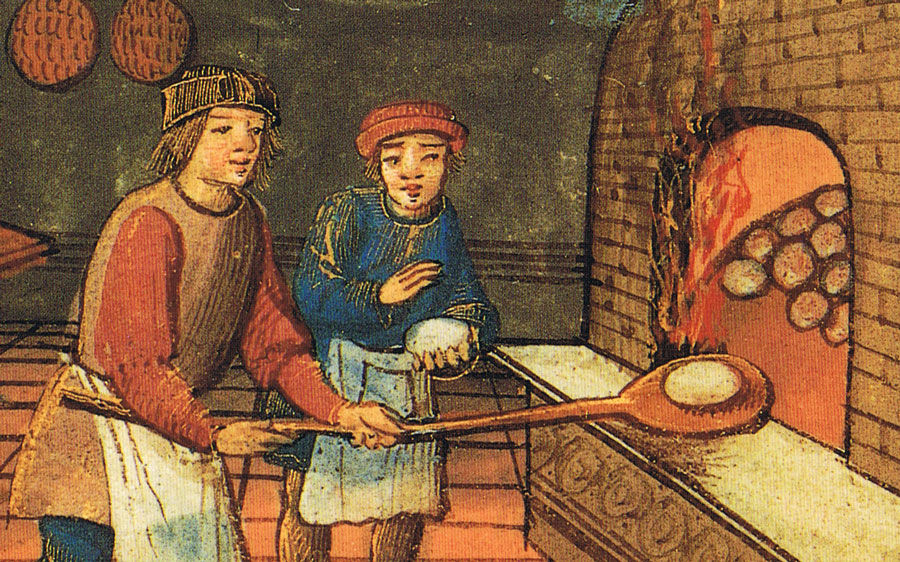
The end of childhood and entrance into adolescence was marked by leaving home and moving to the house of an employer (or master), entering into a university or into the church. Just like the modern day, teenagers learnt skills necessary for life before they became an adult. Children that lived in an urban environment often were placed in apprenticeships. As they were not yet independent, it has been considered that they were exploited by those in superior positions to them. Children as young as 7 years old could enter into an apprenticeship contract but they typically began between the ages of 12-14, with the parent or guardian paying for the training. They were paid very little or nothing in wages, and more likely received ‘pocket money’. These apprenticeships would last a number of years, depending on the craft they wished to learn, meaning that the master craftsman acquired the cheap labour of adolescents who, after a few years, likely possessed the professional skills to be independent. If the apprentice wished to shorten the term on his contract, he was required to compensate for the remaining years. This can be thought of as exploitative as the apprentices did not earn much in the way of wages and the master craftsman may be taking advantage of their age to increase their own profits.
“John Gibbs and Agnes his wife shall teach, train and inform or cause the aforesaid John Goffe, their apprentice, to be informed in the craft of fishing in the best way they know, chastising him duly and finding for the same John, their apprentice, food, clothing linen and woollen, and shoes, sufficiently, as befits such an apprentice to be found, during the term aforesaid.”[1]
There are examples of craftsman providing for their apprentices. The contract of work would be signed under the supervision of the guild, to make sure that the craftsman stuck to set guidelines, giving the adolescent some protection. Although they did not receive much in the way of wages and worked long hours, they received adequate care while learning valuable skills that would guarantee their success in adulthood. As they became a member of the household, it is inevitable that some apprentices became part of the family, as their master became a sort of surrogate father, and were perhaps treated well.[2] Shahar argues that there was affection for apprentices, evidencing this by the fact that they were often included in their masters’ will. With some being executors of their will.[3]
We do have to consider that not all apprentices were treated well, with some probably being abused. We cannot tell from court records how many minor acts of violence were committed by employers onto children as they only show extreme examples. We do know that although masters were legally allowed to partake in “chastising”[4]. if the violence was too severe the courts did take notice.
In the case of two boys from Canterbury, they were released from their service as their mistress had so severely beaten one of the boys that he had gone partially blind:
“Neither he nor his wife could support the boys, and as it appeared from a corporal examination that they had been cruelly beaten, the Court exonerated them altogether from their apprenticeship.”[5]
These instances show that there were indeed cruel masters and mistresses. While many most likely did suffer without taking their master to court, they still possessed the agency to do so in cases of unjustified violence.[6] In contracts, parents or guardians also sometimes made sure to include a clause in which the master guaranteed to handle the apprentice ‘gently’.[7] Therefore, there was a certain amount of protection against apprentices being exploited and abused. From a modern perspective, apprenticeships may seem brutal and harsh, but their lives were not always restrictive and devoid of fun. Many enjoyed themselves on public holidays and it is likely that they did not always follow the rules set by their masters[8].

But what about the more vulnerable adolescents? If we examine the abuse of wards and orphans in medieval London, we can see that, since they were underage, they were more at risk to adults stripping not only their agency but mismanaging their funds and inheritance.[9] Legal fights may have taken place over the possession of wardship as they could be sold, presenting orphans as a commodity with the likely result that the child’s welfare was overlooked. Possible abuses could include marriage of the ward without permission, wasting the orphan’s inheritance and poor care of the orphan’s upbringing.[10] This would suggest that those in wardship had no control over their own inheritance.
However, Hanawalt argues that only 5 percent of 495 orphanage cases in London from 1309 to 1428 suffered an abuse of wardship.[11] Although these are only the cases brought to court, it shows the majority of children in wardships did not have their inheritance misused. In most cases the child or adolescent would be able to report any misappropriations to those closest to them, e.g. another family member, a neighbour, a family friend, or a city official and it would be taken to court to be examined.[12] These networks could protect children in medieval London and importantly meant that they were able to act on their own behalf if they felt their rights were being abused and exploited.

Examining the life of medieval adolescents through our modern perspective means we might regard them as having a tough childhood. Yet after delving a bit deeper we must also acknowledge their agency and educational opportunities. We might even begin to see some interesting similarities between them and our own childhoods.
[1] ‘Indenture of Apprenticeship, 1459’ reprinted in A. E. Bland, P. A. Brown and R. H. Tawney (comp. and ed.) English Economic History (1930) pp. 147– 148 [2] L. Brockliss, ‘Apprenticeship in Northwest Europe 1300– 1850’ in L. Brockliss and H. Montgomery (eds.), Childhood and Violence in the Western Tradition (2010) pp. 171-180 p.177 [3] S. Shahar, Childhood in the Middle Ages, p. 237 [4] ‘Indenture of Apprenticeship, 1459’ reprinted in A. E. Bland, P. A. Brown and R. H. Tawney (comp. and ed.) English Economic History (1930) pp. 147– 148 [5] 'Roll A 16: 1370-71', reprinted in A. H. Thomas (eds.) Calendar of the Plea and Memoranda Rolls of the City of London: Volume 2, 1364-1381 (London, 1929), pp. 128-9 [6] C. M. Barron, ‘The Child in Medieval London’in J. L. Rosenthal (eds.), Essays on Medieval Childhood pp. 40-53 pp. 51-2 [7] S. Shahar Childhood in the Middle Ages p. 234 [8] L. Brockliss, ‘Apprenticeship in Northwest Europe 1300– 1850’ in L. Brockliss and H. Montgomery (eds.), Childhood and Violence in the Western Tradition (2010) p. 171-180 p.177 [9] B. Hanawalt, Growing Up in Medieval London: The Experience of Childhood in History (New York; Oxford, 1993) p. 139 [10] Ibid. p. 139 [11] Ibid. p. 140 [12] Ibid.
Primary Sources
Bland, A. E., Brown, P. A., and Tawney, R. H., (comp. and eds.) English Economic History (London, 1914)
Thomas, A. H., (ed.), Calendar of the Plea and Memoranda Rolls of the City of London: Volume 2, 1364-1381 (London, 1929), pp. 124-131. British History Online http://www.british-history.ac.uk/plea-memoranda-rolls/vol2/pp124-131 (accessed 8 January 2018)
Secondary Literature
Barron, C. M., ‘The Child in Medieval London’ in J. L. Rosenthal (eds.), Essays on Medieval Childhood (Donington, 2007) pp. 40-53
Brockliss, L., ‘Apprenticeship in Northwest Europe 1300– 1850’ in L. Brockliss and H. Montgomery (eds.), Childhood and Violence in the Western Tradition (Oxford, 2010) p. 171-180
Crawford, S., review of N. Orme, Medieval Children (New Haven; London, 2001), http://www.history.ac.uk/reviews/review/254 (review no. 254), (Accessed: 8 January 2018)
Hanawalt, B., Growing Up in Medieval London: The Experience of Childhood in History (New York; Oxford, 1993)
Orme, N., Medieval Children (New Haven; London, 2001)
Shahar, S., Childhood in the Middle Ages (London, 1990)
Wilson, A., ‘The Infancy of the History of Childhood: An Appraisal of Phillipe Aries’, History and Theory, 19, (1980) pp. 132-153

Comments